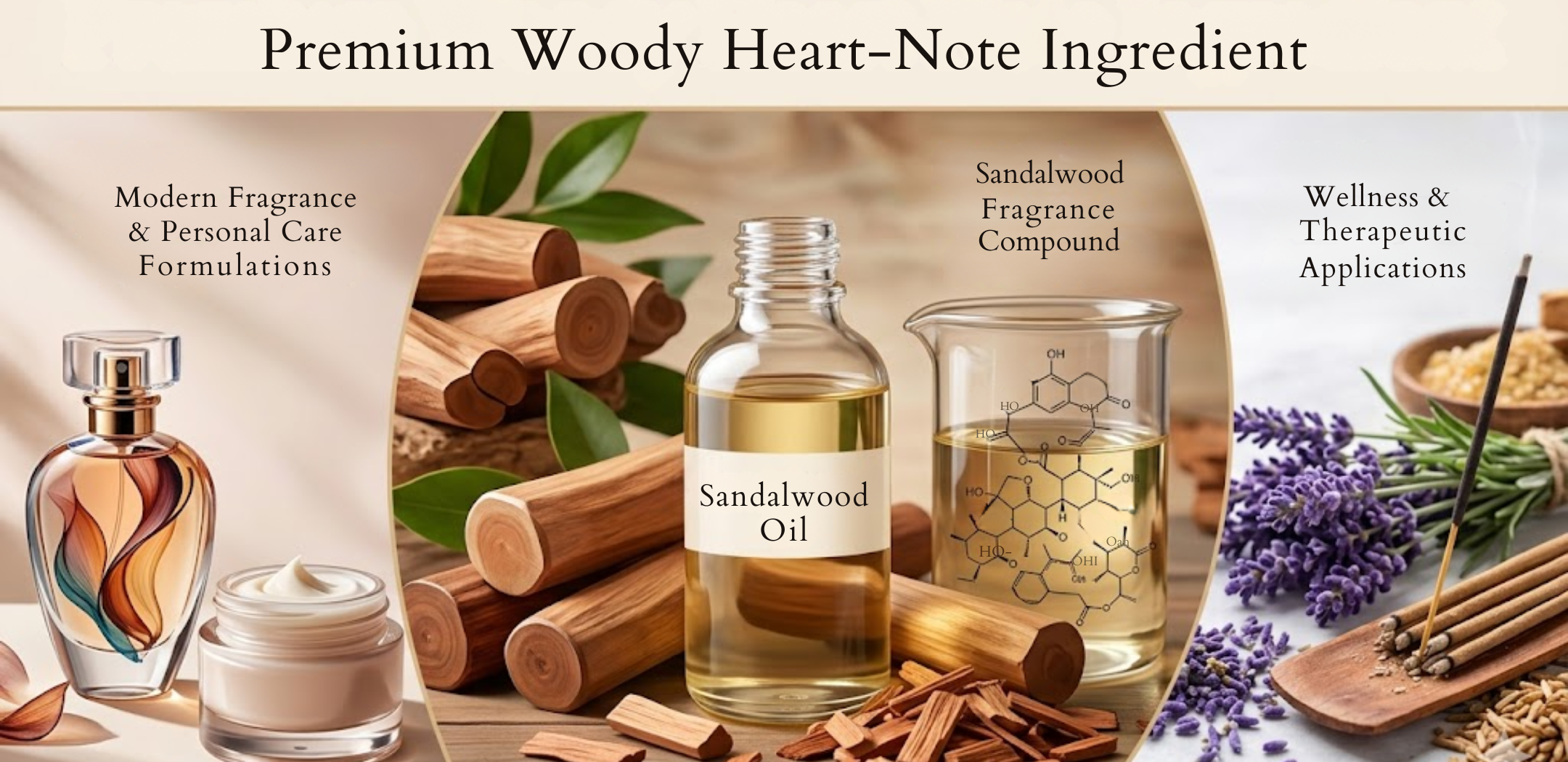
Sandalwood Oil Perfumery Compound
Premium Woody Heart-Note Ingredient for Modern Fragrance & Personal Care Formulations
Sandalwood oil has long held a prestigious position in the global fragrance industry due to its deep woody aroma, fixative strength, and therapeutic perception. Today, ingredient innovators and formulation companies are rediscovering sandalwood oil perfumery compounds as strategic components in luxury perfumes, personal care products, and wellness formulations.
At companies focused on natural ingredient innovation and sustainable sourcing, sandalwood oil compounds are being positioned as high-value formulation tools that bridge tradition, science, and sensory performance.
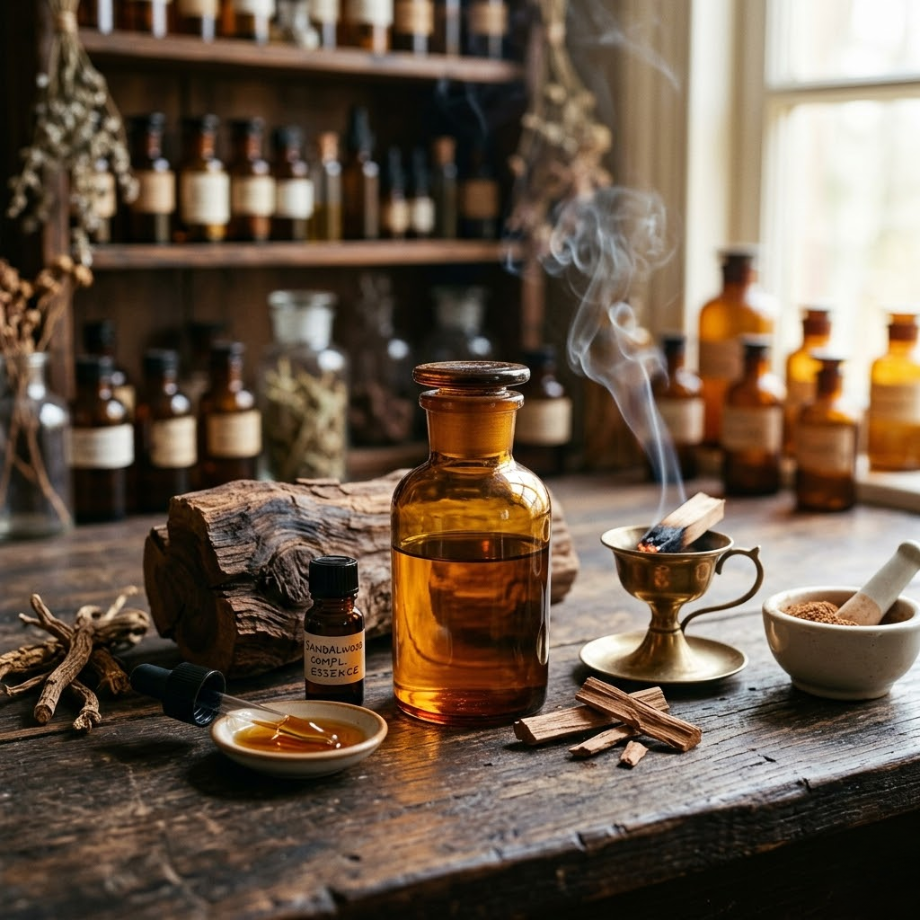
What is a Sandalwood Oil Perfumery Compound?
A sandalwood perfumery compound is a carefully designed fragrance ingredient built around sandalwood oil’s woody heart note, intended to enhance fragrance longevity, depth, and emotional resonance in finished formulations.
Such compounds are typically used in:
- Fine fragrances and luxury perfumes
- Personal care formulations (creams, lotions, serums)
- Aromatherapy blends
- Incense and wellness products
These compounds leverage the natural sensory profile of sandalwood, which is traditionally derived from the steam distillation of heartwood of sandalwood species such as Santalum album.
Why Sandalwood is a Core Perfumery Ingredient
1️⃣ Rich Woody Heart Note
Sandalwood provides a warm, creamy, persistent woody aroma that acts as a central accord in fragrance design.
Its unique scent character enables perfumers to build compositions that feel:
- Sophisticated
- Grounding
- Premium
- Long-lasting
This is why sandalwood has historically been used as a “fixative” in perfumes, helping stabilize volatile fragrance molecules.
2️⃣ High Bioactive Content Influencing Sensory Quality
The sensory and therapeutic value of sandalwood oil is strongly influenced by its key phytochemicals:
- α-Santalol (major component)
- β-Santalol (supporting aromatic compound)
These sesquiterpenes can constitute more than 90% of sandalwood oil composition, directly impacting fragrance depth and formulation performance.
3️⃣ Cross-Industry Versatility
Sandalwood perfumery compounds are not limited to perfumes alone.
They are widely incorporated into:
- Ayurvedic wellness products
- Luxury skincare lines
- Aromatherapy solutions
- Therapeutic balms
- Clean-label cosmetic innovations
Such versatility allows ingredient companies to serve multiple verticals from a single botanical platform.
Sustainability & Modern Ingredient Strategy
Historically, sandalwood became scarce due to overharvesting and slow tree maturation cycles, creating supply challenges and driving the need for:
- Managed plantation cultivation
- Ethical sourcing practices
- Quality verification of active compounds
- Development of advanced perfumery compounds
These sustainability efforts are now restoring market confidence and enabling ingredient suppliers to offer consistent, formulation-ready sandalwood fragrance solutions.
Strategic Value for Formulators & Brands
Sandalwood oil perfumery compounds offer multiple formulation advantages:
✔ Sensory Differentiation
Adds depth and premium perception to fragrance architecture.
✔ Functional Storytelling
Supports brand narratives around tradition, nature, and wellness science.
✔ Clean-Label Compatibility
Plant-derived fragrance components align with consumer demand for transparency.
✔ Emotional Positioning
Woody calming notes help position products in relaxation, mindfulness, and luxury segments.
Frequently Asked Question (FAQ):
It acts as a heart note and fixative that enhances fragrance longevity, depth, and emotional appeal.
α-Santalol and β-santalol are the key aromatic molecules influencing scent richness and therapeutic perception.
They are used in perfumes, skincare products, aromatherapy blends, incense, and wellness formulations.
Its rarity, slow growth cycle, unique aroma, and multifunctional benefits make it highly valued in fragrance and cosmetic industries.
Yes — plantation cultivation, traceable sourcing, and quality assurance processes are improving long-term sustainability.
Yes. Natural or nature-derived sandalwood ingredients align well with clean-beauty and wellness positioning.
It stabilizes volatile notes, improves fragrance diffusion, and contributes to a long-lasting woody base.
Conclusion
Sandalwood oil perfumery compounds represent a powerful intersection of heritage fragrance wisdom and modern formulation science.
For ingredient suppliers and formulation companies focused on sustainable innovation, sandalwood remains one of the most strategic botanicals for creating premium sensory experiences, functional wellness products, and differentiated fragrance systems.