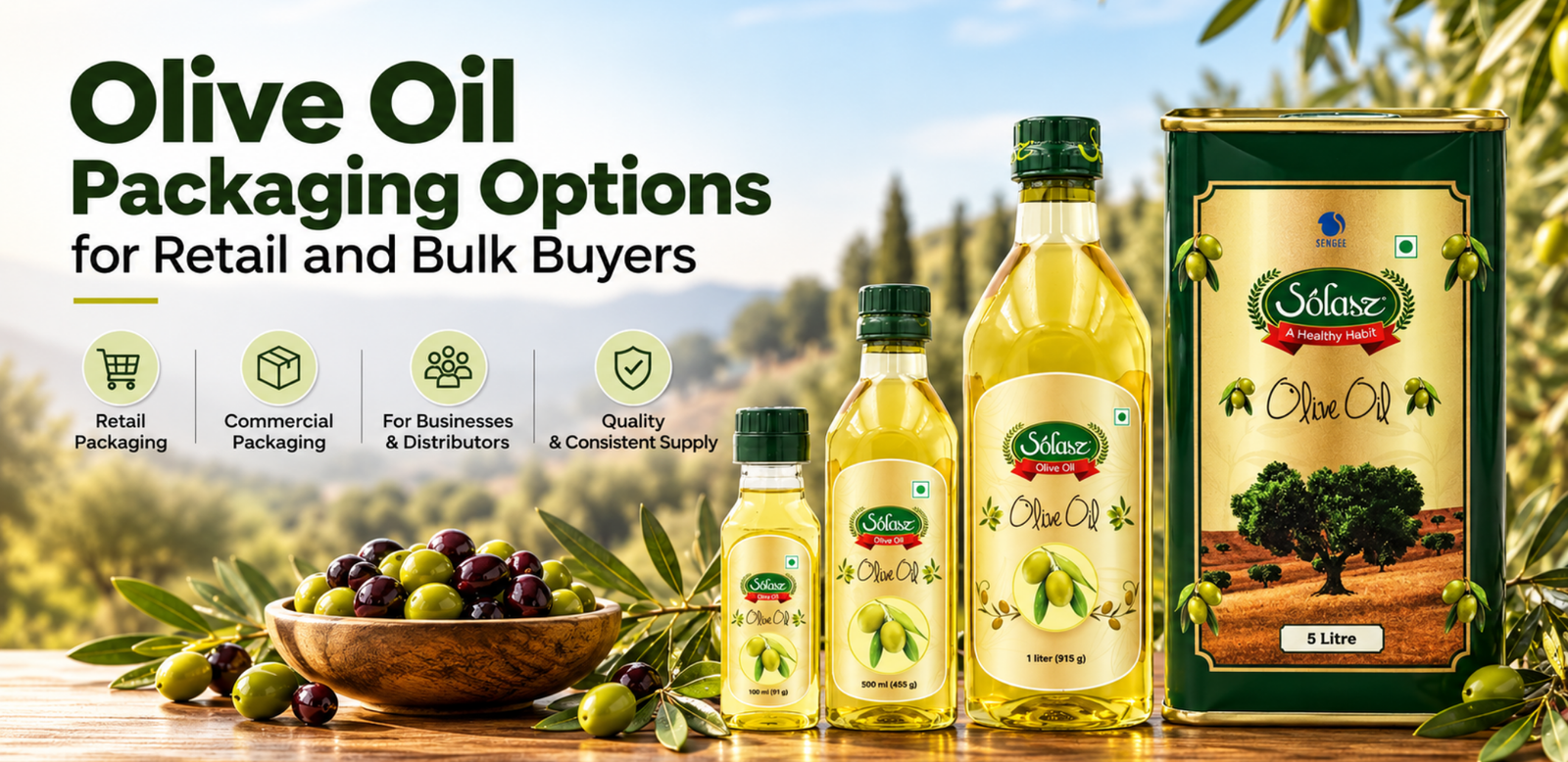
Olive Oil Packaging Options for Retail and Bulk Buyers
Choosing the right olive oil packaging is an important part of product sourcing, storage, and distribution. Whether olive oil is sold through retail stores, used in restaurants, or purchased in bulk by food manufacturers, packaging must offer convenience while helping maintain product quality.
Different businesses have different requirements. Retail brands generally prefer smaller, easy-to-handle bottles, while hotels, restaurants, catering businesses, and food manufacturers often require larger quantities.
Understanding the available olive oil packaging options can help businesses select suitable formats based on their consumption, storage, and commercial needs.
Retail Olive Oil Packaging Options
Retail packaging is designed for individual consumers who purchase olive oil for household cooking, salads, dressings, and other culinary applications.
Smaller packaging formats are generally preferred because they are convenient to store, handle, and use.
Kavita Biotech’s Extra Virgin Olive Oil range lists several retail packaging options:
- 250 ml: A compact format suitable for trial purchases, speciality food stores, and consumers who use olive oil occasionally.
- 500 ml: A practical option for households that regularly use olive oil for cooking, salads, and food preparation.
- 1 Litre: Suitable for frequent users and families looking for a larger retail quantity.
For food brands and distributors, choosing appropriate olive oil bottles and pack sizes can also influence product positioning, shelf presentation, and consumer convenience.
Bulk Olive Oil Packaging for Commercial Buyers
Restaurants, hotels, catering businesses, cloud kitchens, and food manufacturers often consume olive oil in larger quantities.
Purchasing olive oil in larger packaging formats can reduce the frequency of procurement and support day-to-day kitchen or production requirements.
Kavita Biotech identifies a 5 litre packaging option for its Extra Virgin Olive Oil range, making it relevant for businesses with regular commercial consumption.
Commercial olive oil packaging can be suitable for:
- Restaurants and Hotels: For regular food preparation and kitchen operations.
- Catering Businesses: For preparing meals in larger quantities.
- Cloud Kitchens: For maintaining consistent ingredient availability across daily orders.
- Food Manufacturers: For use in sauces, dressings, marinades, and other food applications.
- Distributors and Wholesalers: For supplying olive oil to commercial customers.
Businesses requiring larger volumes should discuss available packaging formats, order quantities, and supply schedules directly with their supplier.
How to Choose the Right Olive Oil Pack Size
Selecting suitable packaging involves more than comparing container sizes. Buyers should evaluate how olive oil will be stored, transported, distributed, and consumed.
Some important considerations include:
1. Monthly Consumption
Estimate the quantity of olive oil required each month. Businesses with higher consumption may benefit from larger packaging formats, while smaller users may find retail packs more convenient.
2. Storage Capacity
Ensure sufficient space is available to store olive oil away from excessive heat and direct sunlight.
3. Distribution Requirements
Retail businesses may prefer smaller, shelf-ready packs, while commercial buyers may prioritise efficient transportation and handling.
4. Ease of Handling
Packaging should be convenient for kitchen staff, retailers, warehouse teams, and end consumers.
5. Product Shelf Management
Consider stock rotation, expected usage periods, and the time between opening a container and consuming its contents.
6. Retail Positioning
For consumer-facing brands, packaging size, design, product information, and presentation contribute to the overall buying experience.
Why Packaging Matters for Olive Oil Quality
Olive oil quality can be affected by environmental conditions, particularly exposure to heat, light, and oxygen.
Appropriate packaging and storage practices help reduce oxidation and preserve the oil’s characteristic flavour, aroma, and freshness.
Businesses should consider:
- Light Protection: Opaque containers, tins, and suitable dark-coloured bottles can help reduce light exposure.
- Secure Closures: Properly sealed packaging helps limit unnecessary contact with air.
- Temperature Control: Olive oil should be stored in a cool, dry environment away from excessive heat.
- Food-Grade Packaging: Containers should be suitable for edible oils and comply with applicable food-contact requirements.
- Proper Storage After Opening: Opened containers should be tightly closed and used within an appropriate period.
For commercial buyers, choosing packaging that matches actual consumption is especially important. A larger container may offer purchasing convenience, but the oil should ideally be used within a reasonable period after opening.
Retail vs Commercial Olive Oil Packaging
| Packaging Size | Typical Buyers | Common Applications |
|---|---|---|
| 250 ml | Individual consumers, speciality stores | Occasional cooking, dressings, trial purchases |
| 500 ml | Households, retail brands | Regular cooking, salads, everyday use |
| 1 Litre | Families, frequent users | Household cooking and food preparation |
| 5 Litres | Restaurants, hotels, caterers, commercial buyers | Professional kitchens and higher-volume food preparation |
Packaging availability and suitability should be confirmed with Kavita Biotech before placing an order.
Choosing a Reliable Olive Oil Packaging and Supply Partner
Along with packaging size, businesses should evaluate the overall reliability of their olive oil supplier.
Important factors include product specifications, packaging availability, quality documentation, minimum order quantities, delivery timelines, and supply consistency.
For businesses sourcing olive oil for resale or commercial applications, clear communication about these requirements helps simplify procurement and maintain operational efficiency.
Kavita Biotech offers Olive Oil and Extra Virgin Olive Oil sourcing options for businesses exploring retail and commercial supply requirements.
Conclusion
The right olive oil packaging options depend on the needs of the buyer.
Smaller packs such as 250 ml, 500 ml, and 1 litre are suitable for retail customers, while larger 5 litre containers can support restaurants, hotels, caterers, and other commercial users.
By considering consumption, storage, handling, and product protection, businesses can select packaging formats that support efficient operations and help maintain olive oil quality.
Looking for Olive Oil Packaging and Bulk Supply Options?
Kavita Biotech supports businesses sourcing Olive Oil and Extra Virgin Olive Oil for retail and commercial applications.
Contact Kavita Biotech to discuss suitable packaging sizes, product specifications, bulk order requirements, and supply options.