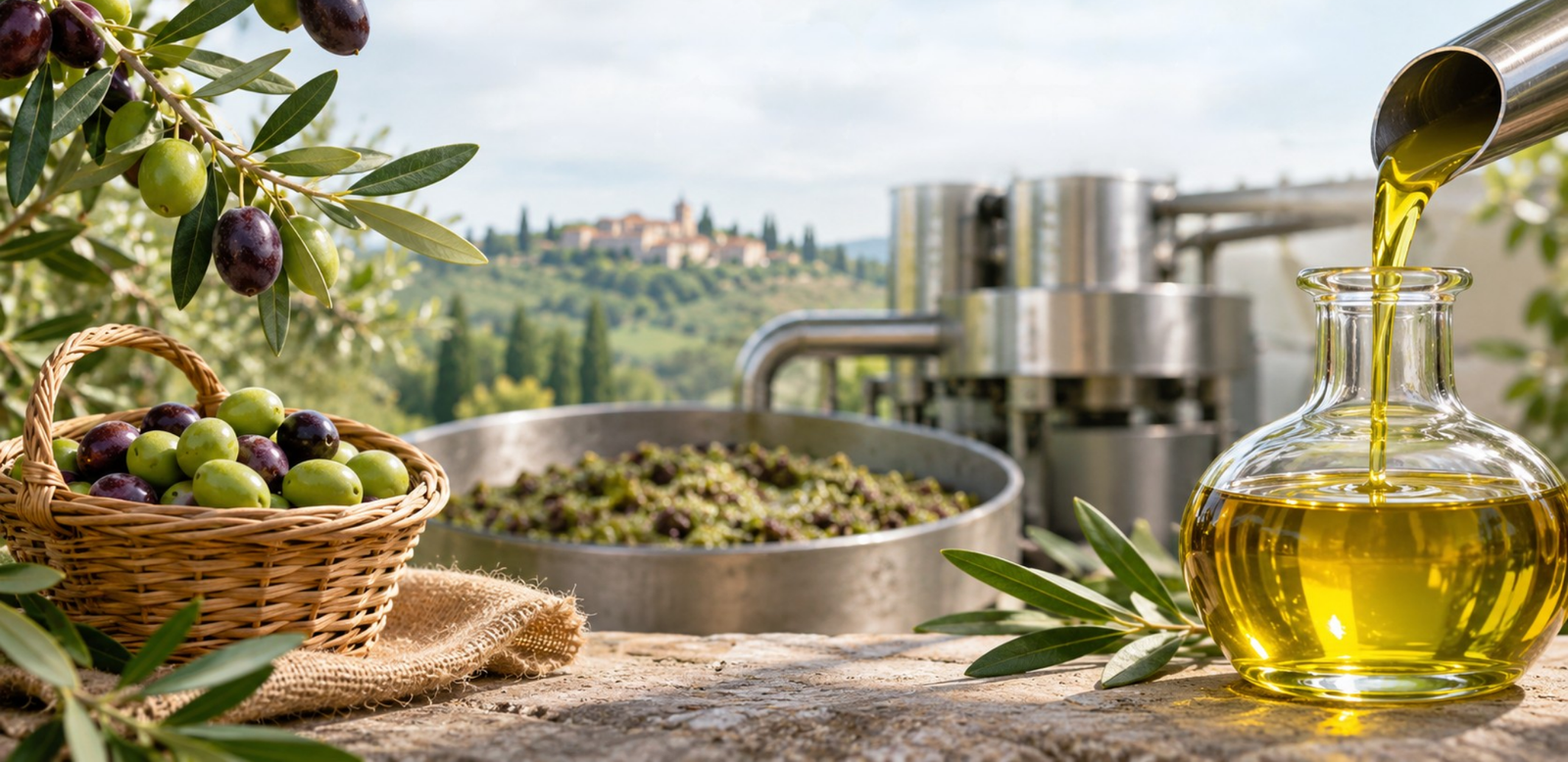
How Olive Oil Is Made: From Olive to Finished Product
Olive oil is widely used in households, commercial kitchens, and food manufacturing. But how does an olive become the finished oil we use?
Understanding how olive oil is made helps businesses recognise the factors that influence its quality, flavour, and characteristics.
The olive oil manufacturing process involves eight important stages, from olive cultivation to final packaging.
1. Olive Cultivation
Olive oil production begins with the cultivation of olive trees in suitable growing conditions.
Factors such as climate, soil quality, olive variety, irrigation, and agricultural practices influence fruit development and the characteristics of the resulting oil.
Different olive varieties can produce oils with distinct flavours, aromas, and properties.
2. Harvesting
Olives are harvested when they reach the desired stage of maturity.
Harvest timing can influence the oil’s flavour, aroma, and quality. Depending on the orchard and production requirements, harvesting may be performed manually or mechanically.
Careful handling helps prevent unnecessary fruit damage before processing.
3. Cleaning
After harvesting, olives are transported to processing facilities for cleaning.
Leaves, twigs, dust, and other unwanted materials are removed using suitable equipment. The olives may also be washed to remove surface impurities.
This process prepares the fruit for crushing and helps maintain appropriate processing conditions.
4. Crushing
The cleaned olives are mechanically crushed into a paste containing olive pulp, crushed stones, water, and oil droplets.
Crushing breaks down the fruit structure, allowing the oil contained within the olives to be released.
This is an essential stage of the olive oil extraction process.
5. Mixing
The olive paste undergoes controlled mixing, also known as malaxation.
During this process, small oil droplets gradually combine into larger droplets, making oil separation easier.
Mixing time and temperature are carefully managed because they can influence extraction efficiency and oil characteristics.
This stage is particularly important during Extra Virgin Olive Oil (EVOO) production.
6. Separation
The mixed olive paste contains oil, water, and solid material.
Mechanical separation systems, commonly using centrifugation, separate the oil from the remaining components.
Additional clarification or filtration may be carried out depending on production requirements.
This stage produces the extracted olive oil for further handling and storage.
7. Storage
Once extracted, olive oil is stored under suitable conditions to protect its quality.
Exposure to excessive heat, light, and oxygen can affect the oil’s flavour and characteristics over time.
Appropriate food-grade containers, controlled temperatures, and careful handling help maintain oil quality before packaging.
8. Packaging
Packaging is the final stage of olive oil production.
The finished oil is packed into suitable containers based on retail, commercial, food service, or bulk requirements.
Proper packaging helps protect the oil during transportation, storage, and distribution.
Kavita Biotech provides Olive Oil and Extra Virgin Olive Oil in multiple packaging formats to meet different business requirements.
Conclusion
From olive cultivation and harvesting to extraction, storage, and packaging, every stage influences the characteristics of the finished oil.
Understanding this process helps businesses make informed decisions when sourcing olive oil for commercial applications.
Looking for Olive Oil for Your Business?
Connect with Kavita Biotech to explore Olive Oil and Extra Virgin Olive Oil packaging options suited to your commercial requirements.