Understanding the Difference
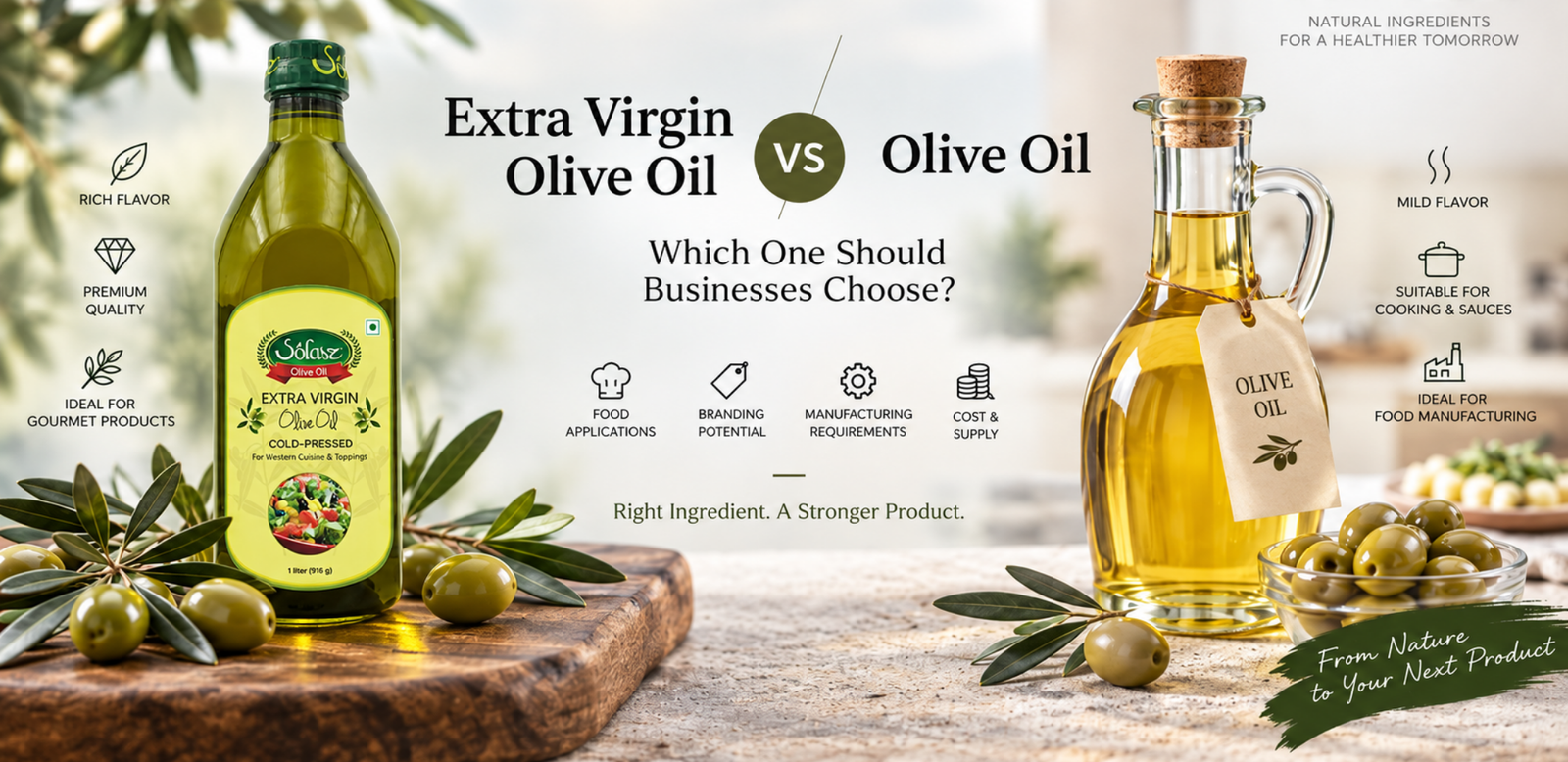
Food brands and manufacturers often compare Extra Virgin Olive Oil vs Olive Oil when choosing ingredients for their products. While both are derived from olives, they can differ in flavor, aroma, sensory profile and suitability for different applications. The right choice depends on the formulation, product positioning, cost and manufacturing requirements.
What Is Extra Virgin Olive Oil?
Extra Virgin Olive Oil (EVOO) is valued for its distinctive aroma and flavor. It can be particularly suitable for products where the character of olive oil is meant to be noticeable, such as salad dressings, dips, marinades, gourmet sauces and specialty food products. For brands positioned around premium, gourmet or Mediterranean-style foods, EVOO can also become an important part of the product story.
What Is Olive Oil?
Olive Oil can offer a comparatively milder sensory profile, making it suitable for sauces, prepared foods, cooking products, dressings and other commercial food applications. It can be a practical choice when manufacturers want olive oil as part of the formulation without a very strong olive taste.
Choosing the Right Oil for Food Products
Extra Virgin Olive Oil may be suitable for:
- Salad dressings
- Dips
- Gourmet products
- Premium culinary preparations
- Specialty food products
Olive Oil may be suitable for:
- Cooking products
- Sauces
- Dressings
- General food applications
- Commercial culinary products
Choosing for Branding and Positioning
EVOO can support premium, gourmet and wellness-oriented product positioning. In products where ingredient quality is part of the consumer proposition, the use of Extra Virgin Olive Oil can strengthen the overall brand story. Olive Oil, on the other hand, may offer more flexibility for general food manufacturing and larger-scale applications.
Choosing for Manufacturing
Manufacturers should also consider processing requirements, cost, availability, packaging options, batch consistency and required supply volumes. The final decision should be based not only on the oil itself but also on how it performs within the complete formulation.
Choosing the Right Supplier
When selecting an Extra Virgin Olive Oil supplier or Olive Oil supplier, businesses should review product specifications, source of origin, quality documentation, packaging formats, storage requirements and the supplier’s ability to provide consistent commercial quantities.
Conclusion
Neither Extra Virgin Olive Oil nor Olive Oil is automatically better for every application. The best choice depends on what the finished product needs to achieve in terms of flavor, formulation, positioning and commercial viability.
Kavita Biotech supplies Olive Oil and Extra Virgin Olive Oil for commercial and food-manufacturing requirements. Contact Kavita Biotech to discuss your application, required quantity and product specifications.
FAQs
Extra Virgin Olive Oil is known for its more distinctive aroma and flavor, while Olive Oil generally has a milder sensory profile. The right choice depends on the product application, formulation and desired taste.
Neither is better for every application. EVOO may suit premium products where olive flavor is important, while Olive Oil may be preferred for general food manufacturing where a milder profile is required.
Yes. Extra Virgin Olive Oil can be used in salad dressings, dips, marinades, sauces, gourmet foods and other commercial food formulations, depending on the product requirements.
Businesses should review the oil grade, product specifications, quality documentation, packaging options, batch consistency, storage requirements and the supplier’s ability to provide the required commercial volumes.
Yes. Kavita Biotech supplies Olive Oil and Extra Virgin Olive Oil for commercial and food-manufacturing requirements. Businesses can discuss their application, quantity and specification needs before selecting the appropriate option.